Farm type: Dairy and cheesemaking
Location: Leicestershire
Size: 152 hectares
Soil type: Mild clay loam
Mixes used: Bespoke herbal cutting mix, grazable cover crop mix
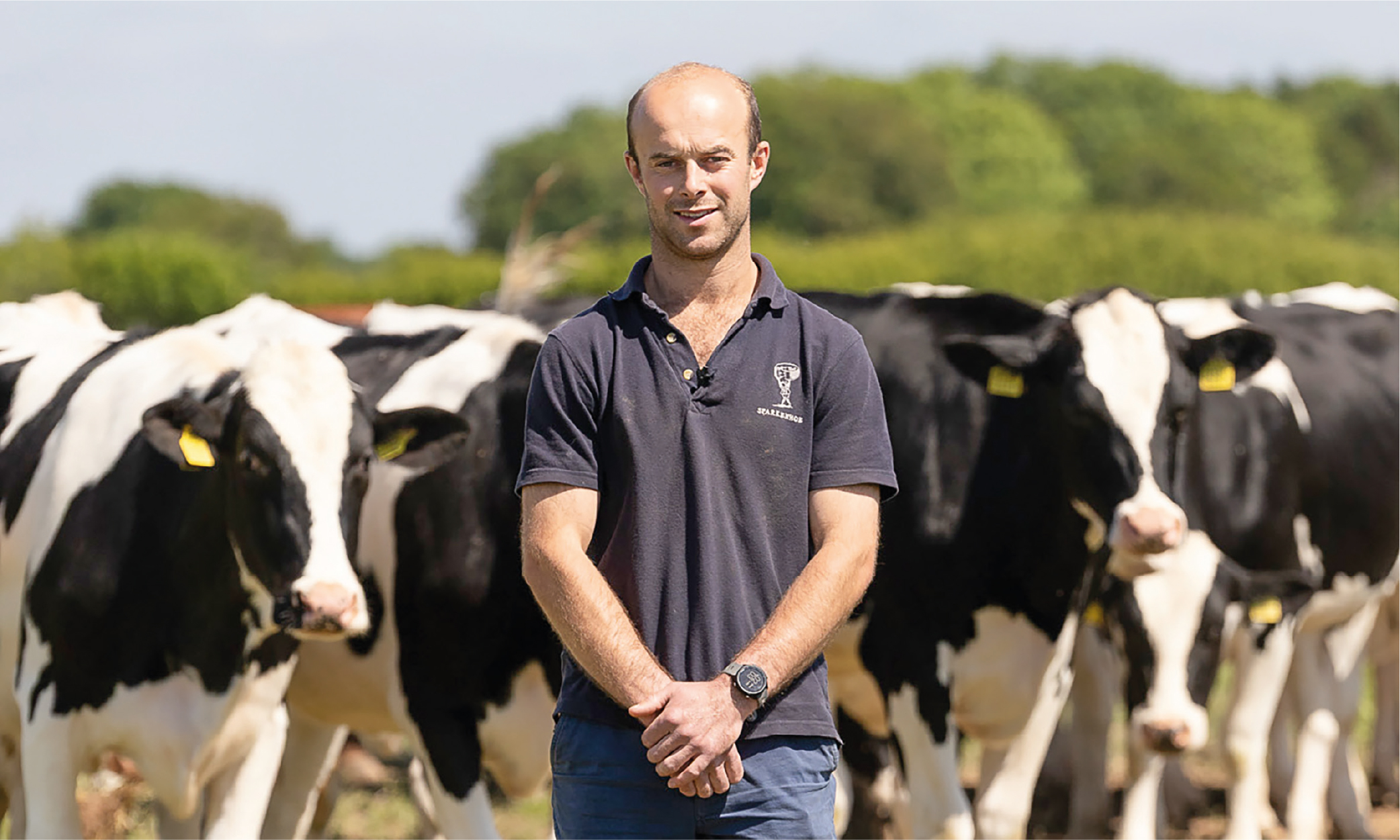
At Sparkenhoe Farm, in Leicestershire, Will Clarke, a third generation farmer, specialises in making raw milk blue cheese and the cloth-bound Sparkenhoe Red Leicester. The dairy cows are fed on herbal leys and whole crop forage, with immediate plans to grow more herbal leys.
Will’s grandfather bought the farm in the 1970s and began the dairy in the eighties but when milk prices fell at the start of the noughties it prompted Will’s parents to diversify into making Sparkenhoe Red Leicester. The Sparkenhoe Blue was added when Will returned to the family farm in 2017.
The cheeses are produced from a herd of 130-140 dairy cows and Sparkenhoe is also home to 140 breeding New Zealand Romneys.
‘We like to grow as much of our own forage as we can and the sixty hectares currently down to grazing are being converted into herbal leys by overseeding,’ Will explains. ‘We’ve wanted to do this for a while but we’ve been pushed by SFI to do it a bit quicker.’
However, Sparkenhoe has a unique challenge with SFI payments. ‘We can’t get paid for the herbal leys at the bottom in the arable fields because we’re in the Bosworth Battlefield Heritage Site,’ Will explains.‘The government recognises that deep-rooting herbs and clovers pump oxygen down deep into the soil and could therefore cause quicker degradation of the artefacts down there.’
But there are still so many benefits to growing the leys.
‘When we first moved to a lower input farming system and into herbal leys we worried that we wouldn’t produce enough silage to sustain the cows throughout the winter,’ Will explains. ‘But we’ve been completely shocked by the amount of grass these herbal leys produce. It just keeps growing and growing.’
The leys are sown early September, a pass with the carrier followed by the power harrow, creates a fine but shallow seedbed and the seed is broadcast in with the grass harrow before rolling a couple of times. ‘When we’ve established them, we’ll graze them with the sheep over winter just to try and thicken them out in the bottom,’ Will explains. ‘The leys will be down for three years with an aim to take three cuts a year.’ The leys are sprayed off to terminate them, then direct drilled with spring beans with a subsoiler, which has worked really well in the last few years.
‘We get all our mixtures from Cotswold seeds because they’re bespoke so exactly what we need and we can talk it all through with Sam Lane,’ Will explains.‘When we first started growing chicory the cows didn’t like it but the last couple of years they’re much more into it. I know a lot of people say that they struggle with chicory but we’ve never had any problems. It bolted quite hard last year and we didn’t have a problem with it once it was clamped. Burnet doesn’t grow very well on our heavier soils but we find that the yarrow grows really well.’
Thirty hectares of specialist Herbal Cutting Ley are also grown on the farm for the clamp.‘We apply 30 kilos of nitrogen in early spring, before the clovers gets going and we put slurry on before the second cut,’ Will explains.
Will is passionate about their Sparkenhoe Red Leicester.‘We believe Red Leicester first became red to make it stand out from other yellowy cheeses at farmers markets. Ours is the only Red Leicester in the country that’s made with raw milk, pumped straight from the parlour into the vat.’ Originally keratin gave the cheese its distinctive colour but now it’s annatto that’s used.
Cheese lovers can enjoy Sparkenhoe’s cheeses from the on-farm Cheese Shop and Tea Room, as well as buying online.
Herbal Leys
Diverse Grazable Cover Crop (SOH2/SOH3/CSAM2/SAM2)