


Digging the detail on cover crops at The Wicken Farms Co, Castle Acre, Norfolk
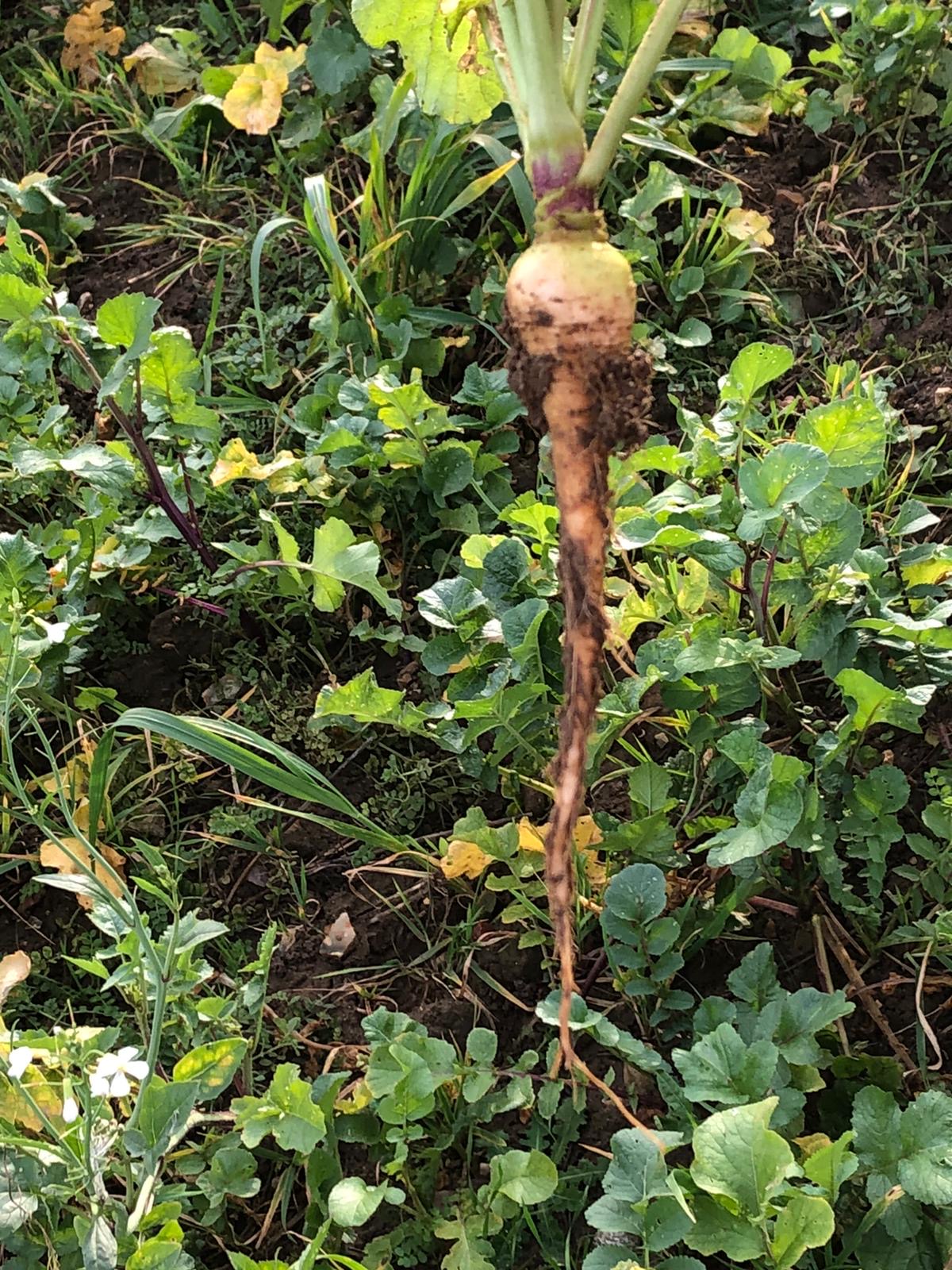

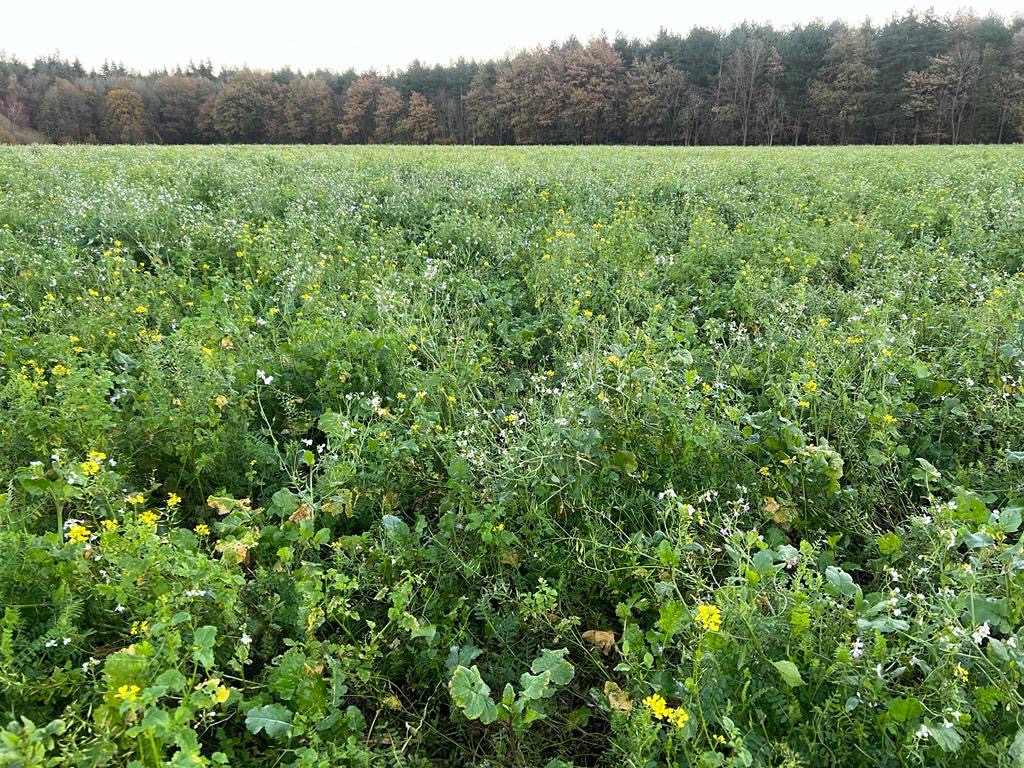
We have seen growing demand for cover crop mixtures over the last 10 years. Some growers have been using them for some time, while others have used incentives like SFI (Sustainable Farming Incentive) to start building cover crops into their farming systems while also being paid for them.
Cover crops provide a wide range of benefits, from reducing soil erosion and keeping the ground covered over winter, to boosting water infiltration rates and breaking up compaction or pans in the soil profile. Other benefits include making soils easier to work and reducing machinery passes. Many cover crop plants are flowering species, boosting resources for pollinators and beneficial insects.
Those growers that are getting to grips with cover crops are now looking for more detail in terms of what these mixtures may be returning to the soil. For example how much Carbon may a cover crop help to build in the soil? Does a cover crop hold and then release residual nitrogen for the following crop and finally how much biomass might a decent cover crop produce?
Farm Manager Toby Hogsbjerg has been taking a deeper dive into the detail of cover crops with the help of data collected by Hutchinsons during their tissue analysis of three cover crop mixtures supplied by Cotswold Seeds and sampled in early October.
The mixtures were sown as soon as possible after harvest. Sowing took place in late July ahead of sugar beet, onions and potatoes. The straw was baled, especially important after barley and all 3 mixtures were sown with a Horsch Terrano Duo drill. The soil types range from medium loams to blow away sand at Wicken Farm. The aim for adopting large scale cover cropping is to protect the soil on the light land, ensuring it stays in the field. The mixes aim to build biomass and body into these thin and fast draining soils, especially in a cropping rotation that traditionally worked the soils hard before each crop. The mixes aim to build biomass and body into these thin and fast draining soils, especially in a cropping rotation that traditionally worked the soils hard before each crop, helping to reduce cultivation passes as well as acting as soil conditioners.
Mix 1: Diverse Grazable Cover Crop - Pre Sugar Beet
Vetch, Forage Rape, Stubble Turnip, Fodder Radish, Tillage Radish, Crimson Clover and Berseem Clover.
This mixture is designed to establish and cover the ground quickly. The deep rooting Tillage and Fodder Radish help open up the soil profile, breaking up plough pans and any compaction prior to the Beet sowing.
As an additional bonus this mix has been designed to improve the grazability of the cover crop, by including higher protein species like Forage Rape and Stubble Turnips, ensuring the grazier has a useful forage throughout the winter.
Mix 2: Onion Ground Cover Crop - Pre Onions
Mustard, Fodder Radish, Vetch
This is a simpler mixture including brassica species and Vetch. As with Mix 1, it was grazed by sheep over the winter. It has been designed to produce rapid, economical green cover and high biomass from an early summer sowing. While it will not hold the livestock as long as mix 1, it does keep the soil covered and aims to improve the condition of the soil, along with some N fixation from the Vetch.
|
Mix 2: Onion ground CC Mix |
Sowing Rate 15 kgs/ha (Grazed in situ) |
|
Fresh Weight Yield |
13 t/ha |
|
Dry Weight Yield |
2.29 t/ha |
|
Dry Matter |
17.6% |
|
Potential Nitrogen Contribution |
70 kgs/ha |
|
Potential Carbon Contribution |
867 kgs/ha |
Mix 3: Potato Ground Cover Crop mix - Pre potato planting
Spring Linseed, Buckwheat, Phacelia, Fodder Radish, Brown Mustard, Vetch, Crimson Clover and Berseem Clover.
Mix 3 was also sown in July prior to potato planting the following spring. The mix includes 8 species and aims to build as much biomass as possible before the next crop, while also improving the workability of the soil to reduce passes prior to potato planting.
|
Mix 3: Potato Ground CC Mix |
Sowing Rate 11 kgs/ha (Ungrazed) |
|
Fresh Weight Yield |
17.07 t/ha |
|
Dry Weight Yield |
3.12 t/ha |
|
Dry Matter |
18.3 % |
|
Potential Nitrogen Contribution |
111 kgs/ha |
|
Potential Carbon Contribution |
1265 kgs/ha |
The feedback from Toby is that having successfully included cover crops in his rotation for a number of years, the soils are in better condition, with improved workability, resulting in less passes needed for the establishment of the next crop. He also feels these free draining soils are holding on to water better during and after periods of irrigation.
In terms of the 3 cover crop mixtures, the standout performer has been Mix 3, the Potato Ground CC, which produced the highest amount of biomass in both fresh weight yield and dry matter.
This mix also made the highest Nitrogen contribution with 111kgs N/ha. As an equivalent applied product this would translate to approximately 12t turkey litter manure per ha (the turkey litter would be applied as standard practice on this farm prior to planting potatoes and sugar beet each spring). This could be a significant saving if the nitrogen contribution from the cover crop can be reliably replicated ahead of the cash crops the following year.
While this is one particular analysis in a given year, it indicates in detail what Cover Crops may be able to deliver in terms of biomass and nutrition in an arable/root crop rotation.
It may also start to pinpoint the contribution of particular species in Cover Crop mixtures and why they should be considered when building mixes to fit a specific system. For example in Mix 3, species like Buckwheat and Phacelia should not be overlooked to reach the impressive freshweight yields shown above.
(Figures were accurate at time of analysis, not guaranteed available for next crop)
More work needs to be done to identify how much the grazing element does or does not affect the above results. Further analysis over a range of years would also start to identify how these mixes may contribute to phosphate and potash along with other trace elements like manganese and boron.
It's likely that with the promising data above and the opportunity to achieve payments through SFI for cover crops, these mixtures will continue to be an important cornerstone of the Wicken Farm system. The final piece of advice from Toby is how much difference the sowing date can make to the establishment and biomass of these mixtures, so aim to sow as quickly as possible post harvest. ‘In terms of biomass, a week or two can make a huge difference,’ explains Toby.
Author: System
Date Posted: 26th June 2026


