

 Seed
Seed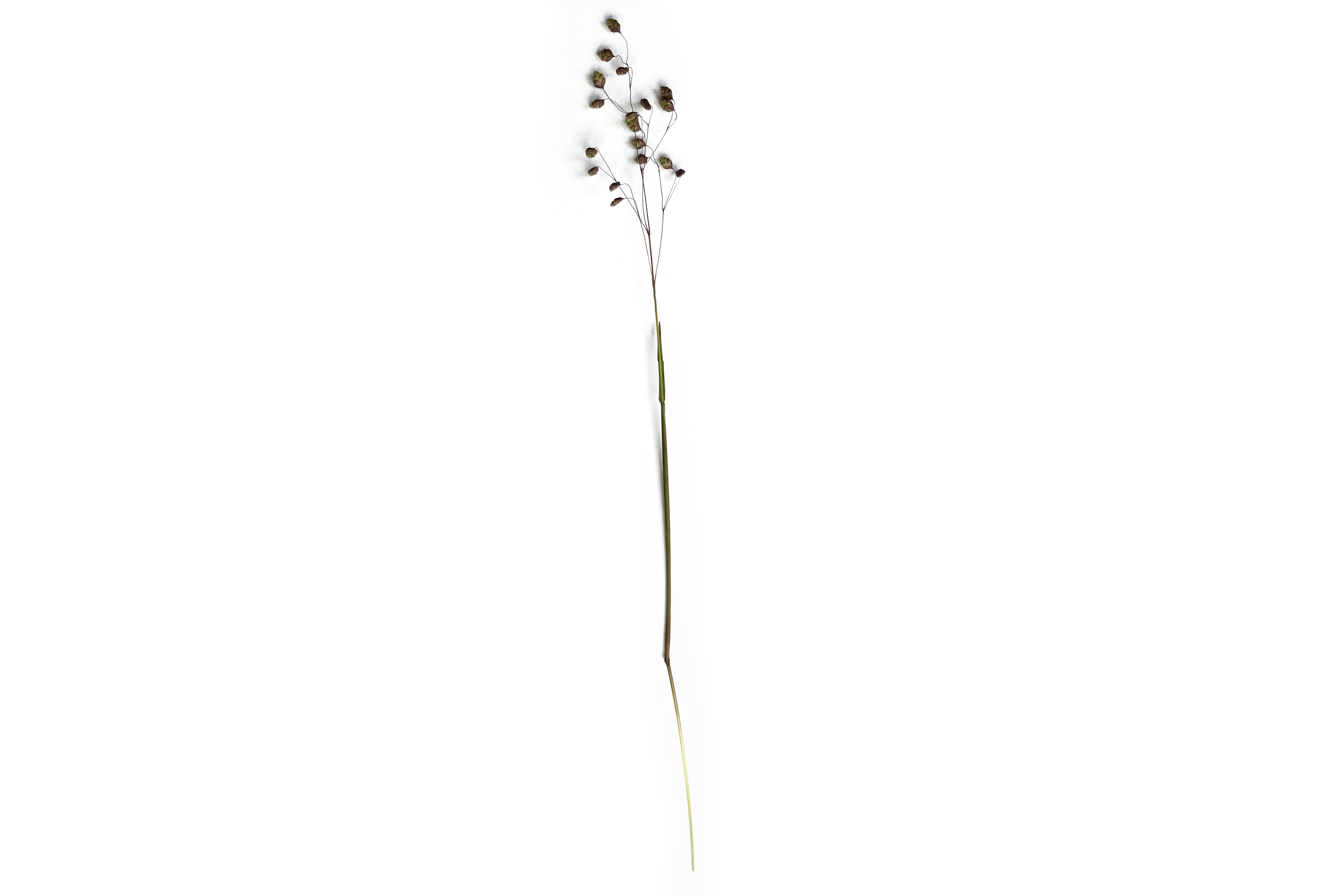 Flowering Plant
Quaking Grass
Quaking grass is a distinctive feature of meadows and grasslands, particularly those on chalky soils. It has an attractive panicle, the plant may be grown in gardens or dried as a decorative feature.
Uses
Its decorative panicle can be an eye catching addition to diverse, species rich grassland, or environmental schemes.
Persistence
A perennial species.
Strengths
A non aggressive species, it compliments a mixture with other non aggressive grasses and wild flowers.
Sowing Rate Advice
Rarely sown as a pure stand
30kg per acre / 75kg per ha.
Ideal Sowing Time
Quaking grass can be sown at any time of the year, but better establishment is achieved if sown in the Autumn.
Management
As a non aggressive species, it requires good grassland management after sowing. Heavy grazing or conversely allowing an established sward to stand and mature late into the season may create too much competition for this delicate species.
Distinguishing characteristics
SeedSeed
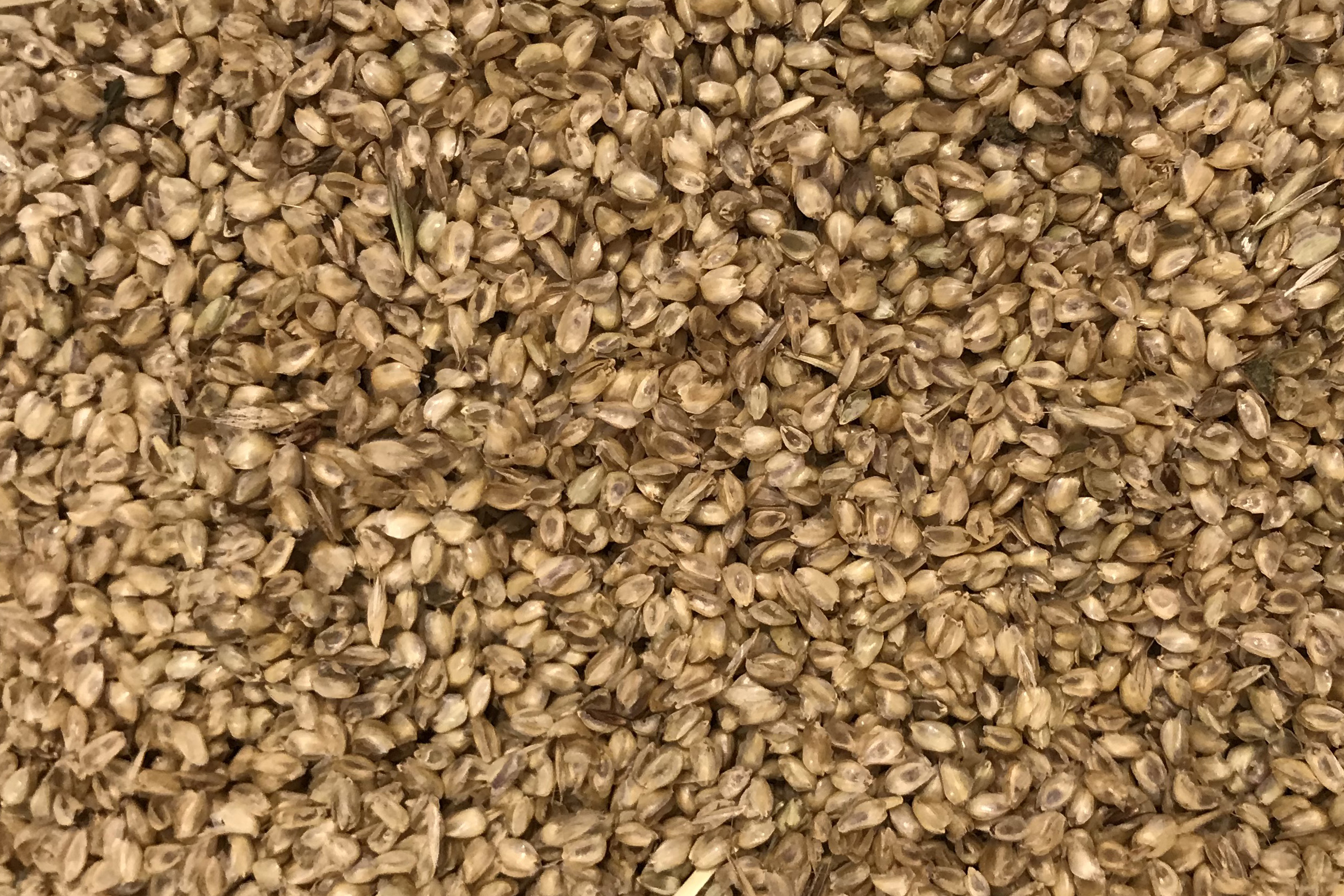
The seed is a rounded, oval shape. It is dark in colour, varying from black to browny purple. It has a rough, pitted surface and a papery casing (glume). It is 3mm in size.
Flowering PlantFlowering Plant
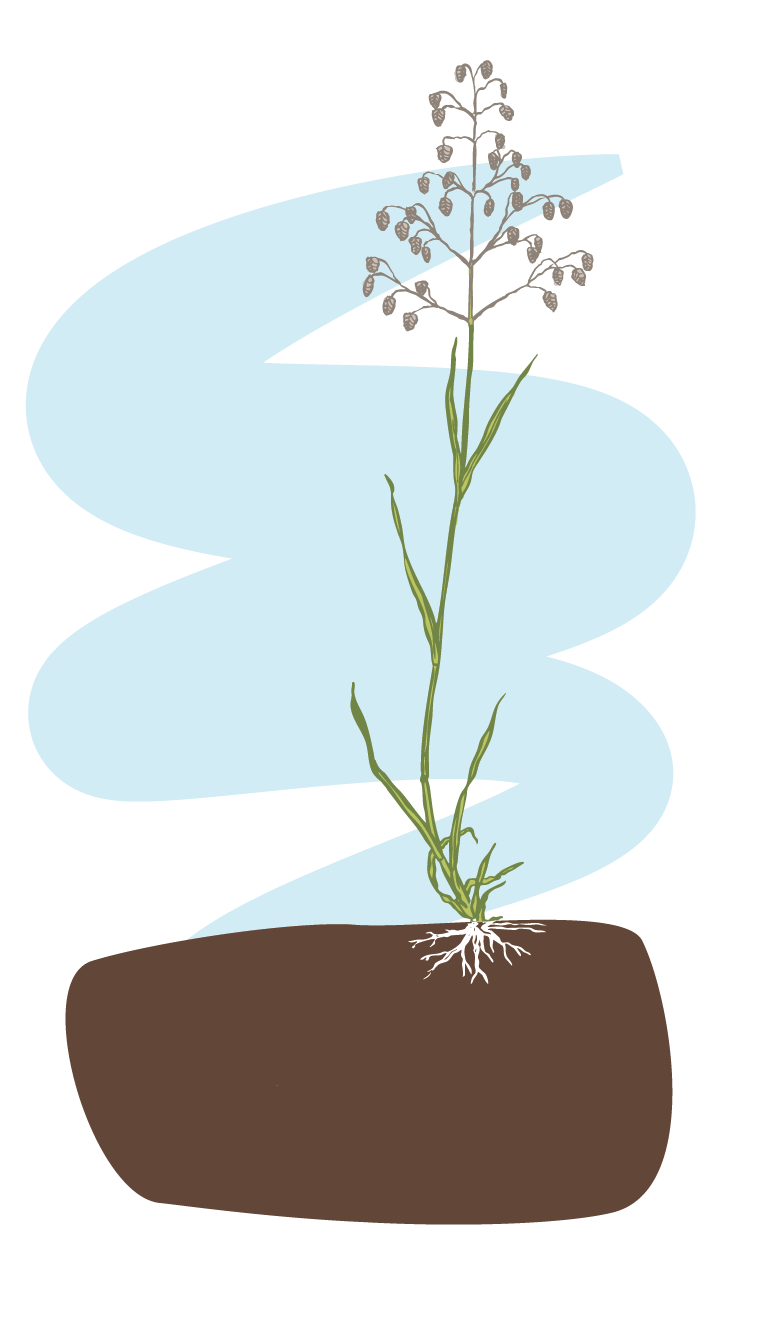
The leaves are flat, green and hairless, leading to a slender, blunt tip. The leaf margins are minutely rough.
Ligules are very short and blunt (0.5 - 1.5cm), they are truncate in shape.
This species has an eye catching, panicle that is pyramidal in shape. It has purplish, brown spikelets (approx. 5mm in width), which are heart shaped on hair like pedicels.
It has a short, creeping, rootstock.
Quaking grass can reach up to 75 cm in height.
Additional Info
Flowers from June - August Other common names are Totter Grass, Dithery Dock, Wigwams and Toddling Grass.
Works well with
Quaking grass can be included in mixtures with other non aggressive species, such as bentgrass, dogstail or sweet vernal grass, its lack of aggression also suits wild flower mixtures.
You can find Quaking Grass in the following mixtures
Related Articles

Cotswold Grass Seeds, Cotswold Business Village, London Rd, Moreton-in-Marsh GL56 0JQ
Web design and development by Pixel Concepts


