


First Hand Case Study: Herbal Leys with Rowan Napper

Farm type: mixed
Location: Oxfordshire
Size: 1400 Acres
Soil type: Chalky loam and heavy Denchworth clay
Mixes used: Maximum yield two year IRG mix, simple herbal ley, chicory grazing ley, lucerne
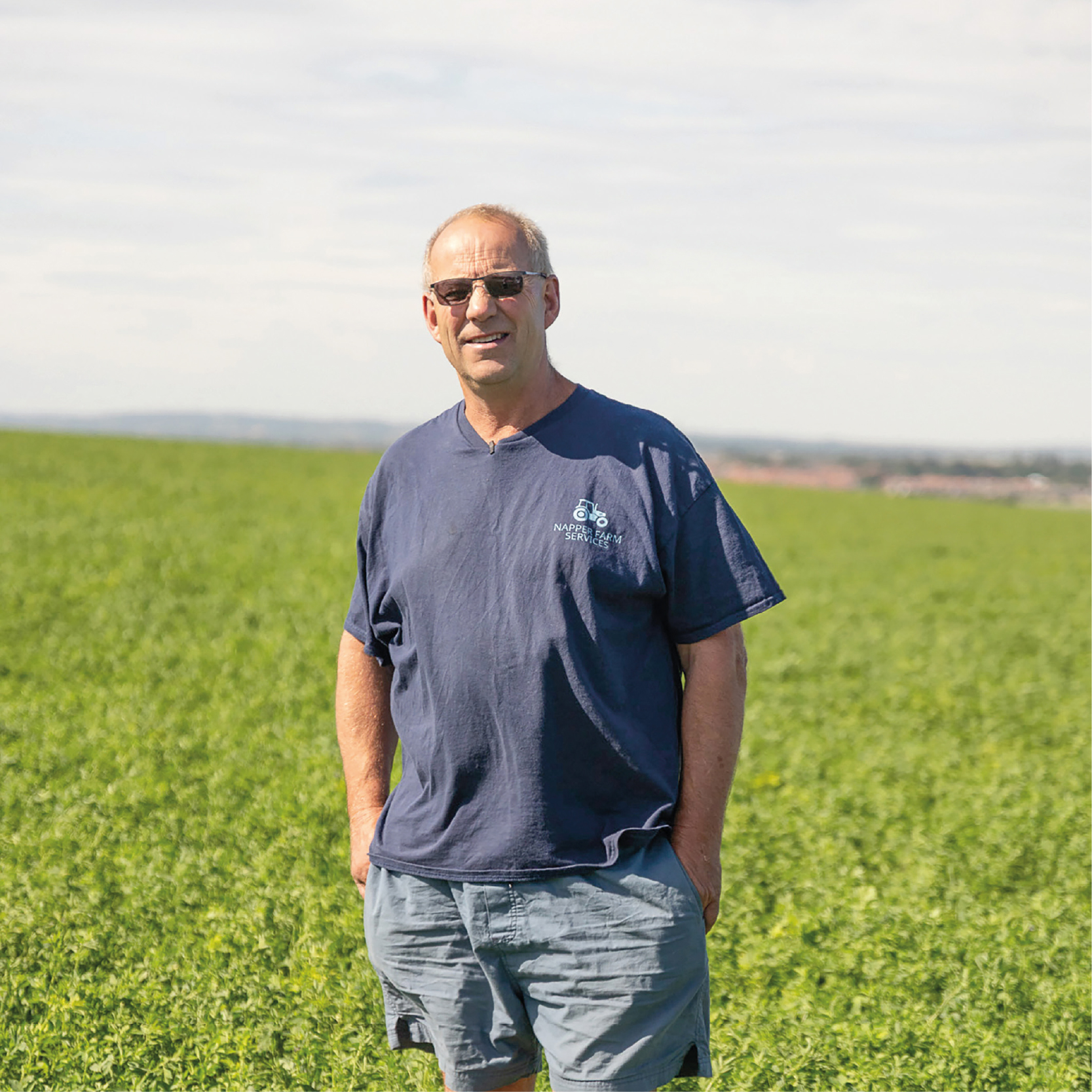
Rowan Napper, his wife and sons, farm at Napper Farm Services in South Oxfordshire. It’s a 1400 acre farm with 300 suckler cows, 350 breeding ewes, 900 acres of arable, plus forage crops such as Lucerne, herbal leys and Italian ryegrass. But it’s the herbal leys that have been ‘proving their worth’ by providing forage in the dry summers.
The main farm business is the mixed suckler cows which are fattened on farm and sold through the shop.‘We kill about a hundred steers a year,’ Rowan says. ‘We make pies and pasties too so sell the whole product and the lambs we produce are also sold through the shop.’
The 150 acres of herbal leys are part of SFI now but Rowan had previously trialled them on a 25 acre field. ‘Sown a bit late, in a wet autumn the herbal leys were slow to germinate and get going but in the dry summer of 2022 it was the only field that was green. This shows both the trials and the advantages of herbal leys. When we drilled in mid September and then went out in March and nothing was growing, everyone thought I was mad. But they all subsequently come very well and they are just fantastic for staying green and providing something for the cows to graze on all summer. I’ve been a big fan of Italian ryegrass because of its consistency and the second cut which can either be put in the clamp or made for hay as a valuable sale off the farm but the ryegrass just burns up in the drought. I’ve got some down the road and it became like a desert in the summer.’
Rowan has now gone into SFI and planted 150 acres of herbal grazing leys and another 80 acres of herbal cutting leys.
‘We planted our first herbal cutting mixes on the 19th of September last year. On the 20th of September it started raining and over the next four days we had 140mil. We had a bit of slug damage which was very unusual for us and the leys were slow to get going this spring. However, we took a first cut on 12th of May and by the 16th of June they’d grown back well, better than our Italian ryegrass leys.
‘They’re fantastic. I love them,’ Rowan enthuses.
‘By the time we turn cattle out in early April, there’s enough cover, which is quite critical here because we are a dry area. I like to get the bulls out and the cows in calf before July. To ensure success I think a good seed bed is important and getting them in in good time, ideally early September.’
Rowan is also a big fan of lucerne and the chicory ley. He has 25 acres of lucerne in the ground and plans to plant another 50 or 60 acres. ‘Lucerne is dependable. It’s quite difficult to grow but every year, dry or wet, it still produces.’ He says the set-stocked cows ‘love chicory’. Once you’ve realised that you mustn’t let chicory get away it’s fabulous because it just keeps on growing. And even when it looks like it’s all gone, the next year, it comes back.’
He’s less sure of cover crops. ‘I don’t want to produce too much biomass up top because getting rid of it on heavy land is difficult. I don’t want to put a tractor over it in the spring other than to drill my spring barley or whatever’s going in and I don’t want to be grazing it because the ground’s too wet and heavy.’
‘But we won’t be changing back to conventional mixes now,’ he concludes.‘We’ll always be growing herbal leys for grazing.’
Maximum-Yield Two Year Silage Ley
Simple Herbal Ley - Four year Grazing & Cutting Ley
Date Posted: 8th April 2026


